Updated: October 20, 2026
What happens when the year you carefully planned gets completely rearranged three months in?
For us, it started with a phone call on March 3 that changed everything.
We had plans for our family, our business, our 15th anniversary, and the year ahead. We had trips on the calendar, decisions about school, big goals for the business, and plenty of things we were looking forward to.
Then we suddenly found ourselves traveling to Texas to meet our newborn son, Peter.
And the year we had planned became a very different year.
So what happens to all those plans when life throws you a major curveball? How do you decide what stays, what needs to change, and what needs to go?
That’s what we’re talking about in this episode of the Catholic Money Show.
How We Plan Our Year
Every year around the fourth quarter, we start thinking about the year ahead.
We have a giant wall calendar that becomes the home base for our family schedule. We also sit down for what we think of as a family board meeting—a time to dream, plan, and discern what we want the coming year to look like.
Some things are already on the calendar. Other things are still ideas we’re praying and thinking through.
For 2026, we had several big plans.
We knew we were taking an RV trip to Yellowstone. Also, we were discerning whether homeschooling or school would be the right fit for our girls. We wanted to finally redo our honeymoon for our 15th anniversary. And after several years of family circumstances affecting our business, we were ready to put some serious attention back into growing it.
It was a pretty full year.
Then came March 3.
One Phone Call Changed the Year
We had been active in the adoption process, but we knew that being chosen for another child might take a long time.
Then on March 2, we received an email about a newborn baby boy who had already been born.
The next morning, we got the call.
We had been chosen.
Suddenly, we had a newborn son, Peter, and we needed to get to Texas that day.
We expected a short NICU stay. We thought we’d be home in a few days and would figure out how to fit this new baby into the plans we’d already made.
It didn’t quite work out that way.
Peter had significant health challenges. What we thought would be a couple of days became a very rocky first month, with time in and out of three different hospitals. There were ongoing urgent care visits, doctor’s appointments, specialists, and a newborn who struggled with severe reflux and sleep.
Our plans didn’t just need a few little adjustments.
They needed to be rearranged.
What Stayed, What Shifted, and What Fizzled
One of the most useful things we could do was look at everything we had planned and ask three questions:
What stayed? What shifted or fizzled?
That helped us make decisions instead of simply feeling like the entire year had been thrown into chaos.
What Stayed
Thankfully, our Yellowstone RV trip stayed on the calendar.
That trip had already been delayed once because of flooding and washed-out roads, so we were particularly happy to finally make it happen.
It ended up being a wonderful family trip, and Peter was able to come along.
Our girls staying in school also stayed.
We had spent months discerning whether school or homeschooling would be the better fit for our family. Looking back, that decision became even clearer. Amanda was out of town for a month dealing with everything surrounding Peter’s care. Homeschooling that spring would have been incredibly difficult.
The decision we made before we knew what was coming turned out to be providential.
What Shifted
Amanda had joined a significant business mastermind shortly before everything changed.
The original plan was to use 2026 as a major growth year for the business. With the reality of sitting bedside with a newborn, dealing with medical appointments, and getting very little sleep, those expectations were no longer realistic.
So the goal had to change.
Instead of trying to scale the business dramatically, the focus became maintaining momentum, continuing to learn, and applying what was possible in that season.
That still produced real wins.
One example was the Catholic Money newsletter. Jonathan was able to take what he was learning and transform the newsletter from something more informational into something that used storytelling and encouraged people to respond and engage.
The business didn’t grow at the pace we had originally envisioned.
But it kept moving.
Sometimes that’s the win.
What Fizzled
Our 15th anniversary honeymoon redo?
That one fizzled.
Between childcare, having a very young baby, having five children, and simply not feeling comfortable leaving the country with a baby that young, the trip wasn’t going to happen.
And that’s okay.
We’ll find another way to celebrate 15 years of marriage.
Maybe we’ll finally redo that honeymoon someday. Maybe we’ll create a completely different celebration.
We’ll see.
What Happened to the Budget?
The same thing that happened to our calendar also happened to our budget.
Adoption is expensive. Add in unexpected medical expenses, specialists, travel, and other costs, and our financial plans took a significant hit.
Thankfully, we had already built a solid financial foundation.
We applied for grants and were able to receive reimbursement for some adoption expenses. We also had some sales that helped.
Our budget didn’t magically prevent the unexpected expenses.
It gave us a framework for handling them.
We had already sat down and decided what mattered most, what resources were available, and what our priorities were. So when our circumstances changed, we could adjust the plan instead of starting from scratch.
Having a plan allowed us to take some punches and stay in the ring.
That’s one of the reasons we believe budgeting matters so much.
A budget gives you information about your reality. It helps you see what you have, what you need, and what you can change when something unexpected happens.
Plan Your Year With Prudence and Discernment
This experience also changed the way we think about planning.
Planning is an act of prudence.
It gives us an opportunity to look ahead, think through our priorities, consider the realities in front of us, and make intentional decisions about how we’re going to use our time and money.
But our plans aren’t promises about the future.
We have to leave room for God’s providence.
Amanda has always been someone who loves seeing her plans come to fruition. When something disrupts those plans, that can be difficult.
Over the years, God has provided plenty of opportunities to practice letting go.
And that’s really what this year became: another opportunity to practice abandonment to God’s providence.
“If the Lord Wills”
James gives us a beautiful reminder about making plans.
He writes:
“If the Lord wills, we shall live and we shall do this or that.”
— James 4:15
That doesn’t mean we stop planning.
It means we remember who is ultimately in charge.
We can make the plan, we can discern, prepare and work diligently toward something we believe is good.
And then we hold it loosely.
In Abandonment to Divine Providence, Fr. Pierre de Coussade describes this kind of surrender as an active abandonment of our will to God. We’re still called to act, discern, plan, and be intentional.
We’re simply willing to follow when the direction changes.
Plan A Helps You Handle Plan B
There’s another reason planning is valuable: it teaches you how to adapt.
If you’ve thought through your priorities, practiced making decisions, and considered what you want to accomplish, you’re better prepared when circumstances change.
Think about a sports team.
You can spend time practicing your plays and preparing for the game. Then the opponent does something you didn’t expect.
The practice wasn’t wasted.
You have built the skills and habits that allow you to respond.
The same thing happens with planning.
Sometimes Plan A works.
Sometimes Plan B shows up.
And sometimes you need to throw the whole thing in the shredder and start again.
The planning still mattered.
Don’t Let Your Year Plan Itself
We’re living in a very distracted time.
It’s incredibly easy to reach the end of a season and realize that school, work, activities, appointments, errands, and everyone else’s schedules essentially decided what your year looked like.
You were busy.
You accomplished things.
But did you intentionally build the family culture you wanted?
Did you make space to ask God what He wanted you to protect?
Did you think about the things that matter most before the calendar filled itself?
You aren’t going to accidentally become a saint.
You aren’t going to accidentally fulfill the unique mission God has given you.
We need to create space to listen, discern, and make intentional choices.
That’s why we plan.
We’re Planning Big for 2027
After everything that happened in 2026, you might think we’d be hesitant to make big plans for the next year.
Quite the opposite.
We’re already planning big.
Italy is on the calendar for 2027.
We’re dreaming about the Camino in the summer of 2028.
God willing, we’ll make those trips.
And if something changes?
We’ll adjust.
Some things will happen exactly as we planned. Others will need to be shifted, or disappear from the calendar entirely and perhaps show up again a year or two later.
That’s okay.
We’re going to keep planning boldly while holding our plans loosely.
Plan Your Year With WalletWin
If you’re ready to start planning your own year, we’ve created the tools we actually use in our own family.
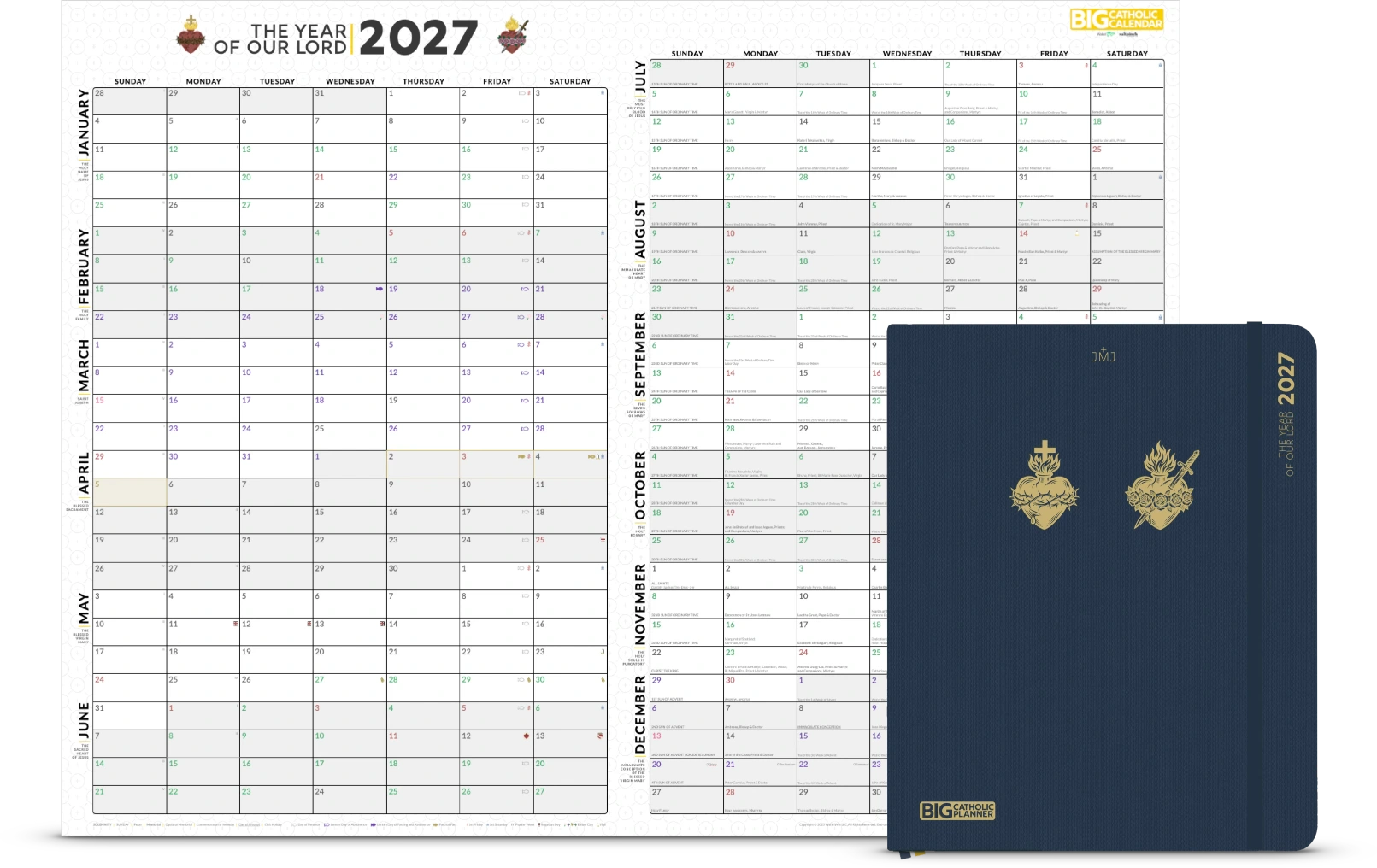
The Big Catholic Planner, giant wall calendar, Saintly Productivity Bundle, and our annual planning workshop combine Catholic liturgical life with practical planning and organization tools.
We use these products ourselves. We eat our own dog food—and it’s delicious.
You can check out the Big Catholic planning products here:
As you plan your year, take some time to dream, make practical plans, discern what God may be asking of you, and then surrender the year to Him.
Plan boldly.
Be diligent with the gift of your time.
And hold it loosely.
God willing, we’ll see you at the 2027 planning workshop.
This Episode Is Sponsored by Karol Coffee Co.
Good coffee has a way of making planning, working, and keeping up with five kids a little more enjoyable.
Karol Coffee Co. offers freshly roasted coffee that you can order on a subscription, this way, you don’t have to remember to reorder every time you run out.
How Karol Coffee Subscriptions Work
1. Choose your coffee
Pick one of their tried-and-true roasts, or let them choose for you with their Roaster’s Select.
2. Set your frequency
Choose weekly, biweekly, or monthly deliveries—whatever works best for your schedule.
3. Enjoy!
Get freshly roasted coffee delivered to your door, or stop by their Como Park café to pick it up in person.
Use code WALLETWIN for 10% off your first order.
Explore Karol Coffee subscriptions
Thanks for joining us for this episode of the Catholic Money Show. God bless!